
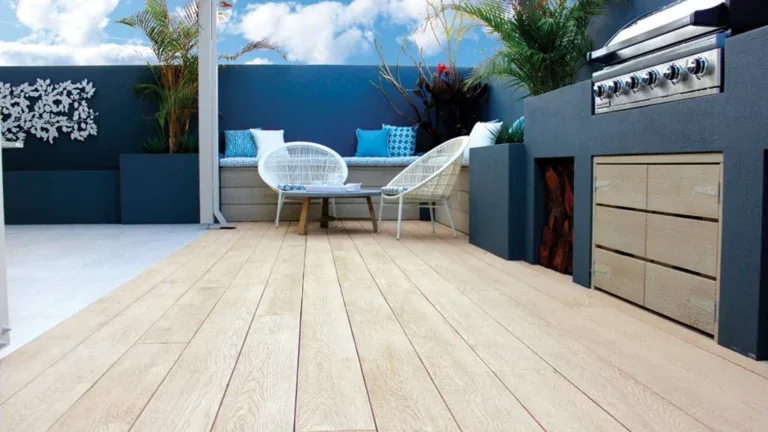
Best Timber Decking Alternatives
Low-Maintenance Options for Your Garden
Key Highlights
- Explore the top alternatives to traditional timber decking
- Compare materials like composite, aluminium, PVC and porcelain
- Understand the pros and cons of each option
- Discover why Millboard’s composite decking is a premium alternative
Introduction
If you’re planning a new garden deck or replacing an existing one, you’ve likely considered traditional timber. While it offers a warm, natural look, timber decking can come with a long list of issues — from rot and algae to high ongoing maintenance.
Fortunately, there are now several high-performance alternatives available that offer better durability, lower upkeep, and long-term value. In this guide, we explore the best timber decking alternatives, and help you choose the right solution for your home.
Why Look Beyond Timber?
Timber decking has been a garden favourite for years, but it’s not without its challenges:
High maintenance: requires regular staining, sealing or oiling
Prone to rot and mould: especially in shaded or damp areas
Slippery when wet: especially without anti-slip treatments
Splitting and warping: natural expansion and contraction over time
Environmental concerns: tropical hardwoods raise sustainability issues
For many homeowners, these issues lead to additional cost, effort, and shorter deck lifespan.
Top Alternatives to Timber Decking
1. Composite Decking
Composite decking combines visual appeal with impressive durability. Made from a blend of materials (often mineral or polymer composites), it replicates the look of timber without the traditional drawbacks.
Benefits:
Low maintenance: no sealing or staining required
Slip-resistant: ideal for wet or shaded areas
Long lifespan: many products last 25+ years
Consistent appearance: won’t fade, split or warp
Millboard composite decking goes a step further. It’s:
Wood-free and non-porous
Moulded from real oak boards for authentic texture
Built with a durable Lastane surface for slip resistance and stain resistance
Explore Millboard decking collections
2. Aluminium Decking
Aluminium is a strong, non-combustible material often used in commercial or high-rise settings.
Pros:
Excellent structural strength
Fire-rated and rot-proof
Durable surface finish
Cons:
Feels cold and hard underfoot
Limited aesthetic appeal for home gardens
Can become hot in direct sun
Best suited for balconies, roof terraces or public walkways.
3. PVC / Plastic Decking
Made entirely from plastic, PVC decking is another low-maintenance option. It’s affordable and resistant to water, rot and insects.
Pros:
Lightweight and easy to install
Low cost
Doesn’t absorb moisture
Cons:
Can look and feel artificial
Susceptible to UV fading or brittleness over time
PVC is typically chosen for budget-conscious projects or temporary decking.
4. Stone or Porcelain Paving
Although technically not decking, porcelain or stone paving can be a durable alternative for level garden surfaces.
Pros:
Very hard-wearing
Available in a variety of colours and textures
Non-combustible
Cons:
Can be cold and hard underfoot
Limited use in raised or suspended decking areas
Best for patios, paths and formal seating areas.
How to Choose the Right Decking Alternative
When weighing up the options, consider the following:
Aesthetics: Do you want a natural timber look or something more contemporary?
Maintenance: How much time do you want to spend on upkeep?
Comfort: Will people walk barefoot or sit directly on the deck?
Location: Is your space shaded, coastal or prone to wet weather?
Sustainability: Are you looking to reduce your environmental footprint?
Why Choose Millboard?
Millboard composite decking is one of the leading timber alternatives on the market. It combines the appearance of high-end wood with the performance of modern materials.
Key features:
Moulded from real oak boards for a natural grain and texture
Wood-free resin-mineral core for long-term dimensional stability
Lastane surface layer that resists algae, moisture and scratches
UV-stable colours that retain their finish for years
Made in the UK with recycled content and low-waste production
Whether you’re building a wraparound garden deck, a courtyard feature or a multi-level entertaining space, Millboard offers style, comfort and durability without compromise.
Order free samples of Millboard decking
Frequently Asked Questions
What’s the best alternative to timber decking?
Composite decking is the most popular alternative thanks to its low maintenance, natural look and long-lasting performance. Premium options like Millboard offer the most realistic timber effect without the hassle.
Does composite decking get slippery when wet?
Millboard’s decking is designed with a high-grip surface texture and performs well even in wet or shaded conditions.
Is composite decking more expensive than wood?
It may cost more initially but delivers better value over time due to reduced upkeep and longer lifespan.
Can I install it myself?
Yes. Millboard boards are easy to cut and fit using standard tools, and their Durafix fixings make for a clean finish with no visible screws.


