
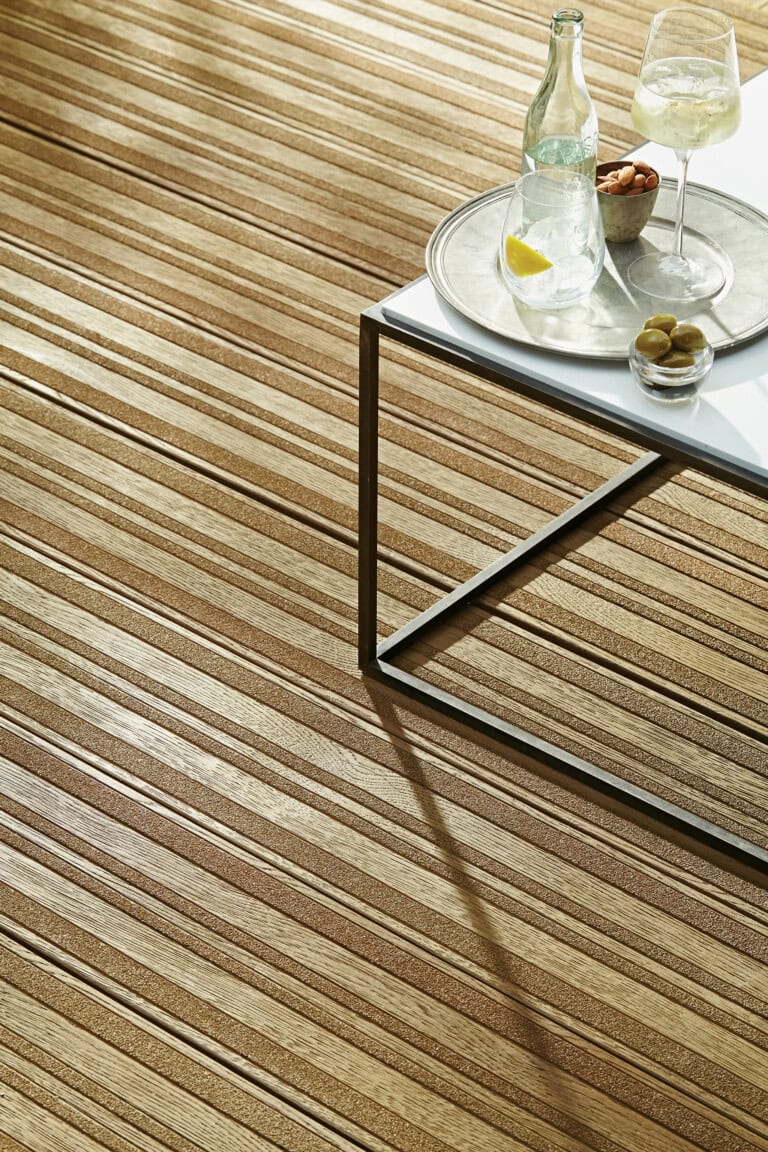
Discover Highly Slip-Resistant Composite Decking
Article Highlights
When planning a project, choosing the right decking materials is essential for both safety and style. Whilst traditional timber decking offers a classic look, it often struggles with issues like moisture damage, mould, and slippery surfaces, especially in wet climates like the UK.
Composite decking boards provide a low-maintenance and durable alternative to timber, designed to overcome these challenges and offer a safer, more reliable solution for your outdoor space.
This guide will explore the key benefits of composite decking with high slip-resistance and why it’s the ideal choice for modern gardens and commercial terraces.
Click on one of the sections below to learn more
Enjoy your decking space year-round while minimising avoidable slip hazards.
Composite decking avoids moisture problems associated with timber decks.
The unique composition of Millboard decking boards ensures safety, performance and aesthetics.
Regularly eliminate algae build-up and ensure best practice installation.

Benefits of Highly Slip-Resistant Composite Decking
Enjoying your outdoor space shouldn’t compromise your or anyone else’s safety. However, the problem with traditional wooden decking is that it can become very slippery in wet conditions, unfortunately frequent in the UK.
And it isn’t just wet weather that poses a hazard: traditional timber decking is prone to algae, mould and fungal growth, which create a slippery layer on the surface. Even conventional composite decking, which uses wood fibres, can suffer from these problems, as they often aren’t completely resistant to biological growth. In contrast, Millboard decking is made from entirely wood-free materials, the non-porous surface resists organic matter and provides exceptional traction. Although biological growth can be present on any surface that hasn’t been cleaned.
Keep your family and guests safe by choosing Millboard decking boards with excellent slip-resistance. Explore the benefits:
- Reduces slip hazards even in wet conditions.
- Safer to use with swimming pools, ponds and water features.
- Moisture- and mould-resistance helps the decking maintain its grip with minimal upkeep.
Slip Resistance of Composite vs. Traditional Timber Decking
There are several reasons why composite decking is a better choice for slip resistance than timber. Millboard tests the slip resistance of their composite deck boards using a standardised pendulum test. A slip resistance above 36 poses a low slip risk.
Millboard’s Enhanced Grain Decking far exceeds these requirements, earning a score of 49-60 in dry conditions and 36-42 when wet. Even on a slope, Millboard’s slip resistance significantly outperforms timber and generic composite decking brands.


Conversely, timber decking without anti-slip inserts will present slip hazards in wet conditions and may only just meet recommendations set by the Health and Safety Executive (HSE). Micro profiles and treated timber with grit strips can greatly improve traction. Untreated or smooth decking boards are particularly risky, especially in shady, high-moisture areas. Moreover, timber becomes extremely slippery if algae or mould grow on the surface.
What Affects the Slip Resistance of Wooden Decking?
- Moisture: Wet wood becomes 38% more slippery and then takes a significant amount of time to dry.
- Mould, Moss and Algae: Organic growth creates a slick layer which can be extremely dangerous.
- Wood Treatment: Anti-slip treatments and moisture-resistant coatings help avoid the slip hazards associated with traditional timber decking.
- Grooves: Deck grooves can create extra friction to enhance the safety of outdoor spaces.
Key Features of Millboard’s Decking
Millboard composite decking has excellent slip resistance, even when wet. This gives you peace of mind while spending time with your loved ones outdoors. The decking’s reassuring grip comes down to several factors, including the unique Lastane® layer and the impermeable core.
Decking Surface and Texture
Most decking boards, particularly timber or conventional composite decking, utilise grooves or grit strips to enhance slip safety. However, Millboard uses an elastomer layer, which is supple, and has a grippy, rubber-like surface. Due to its high traction, you can achieve the appearance of freshly milled and stained timber without the risks associated with it.
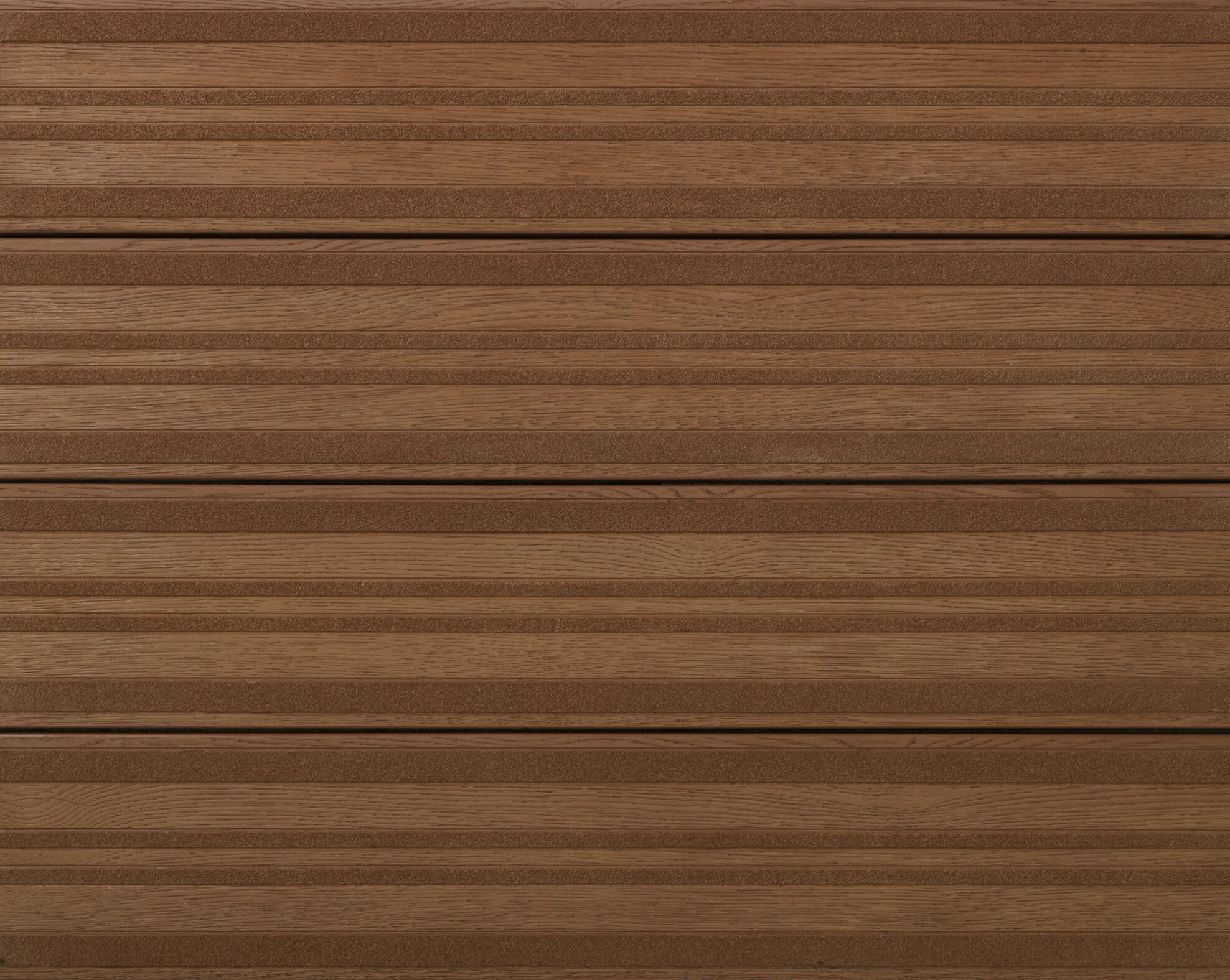
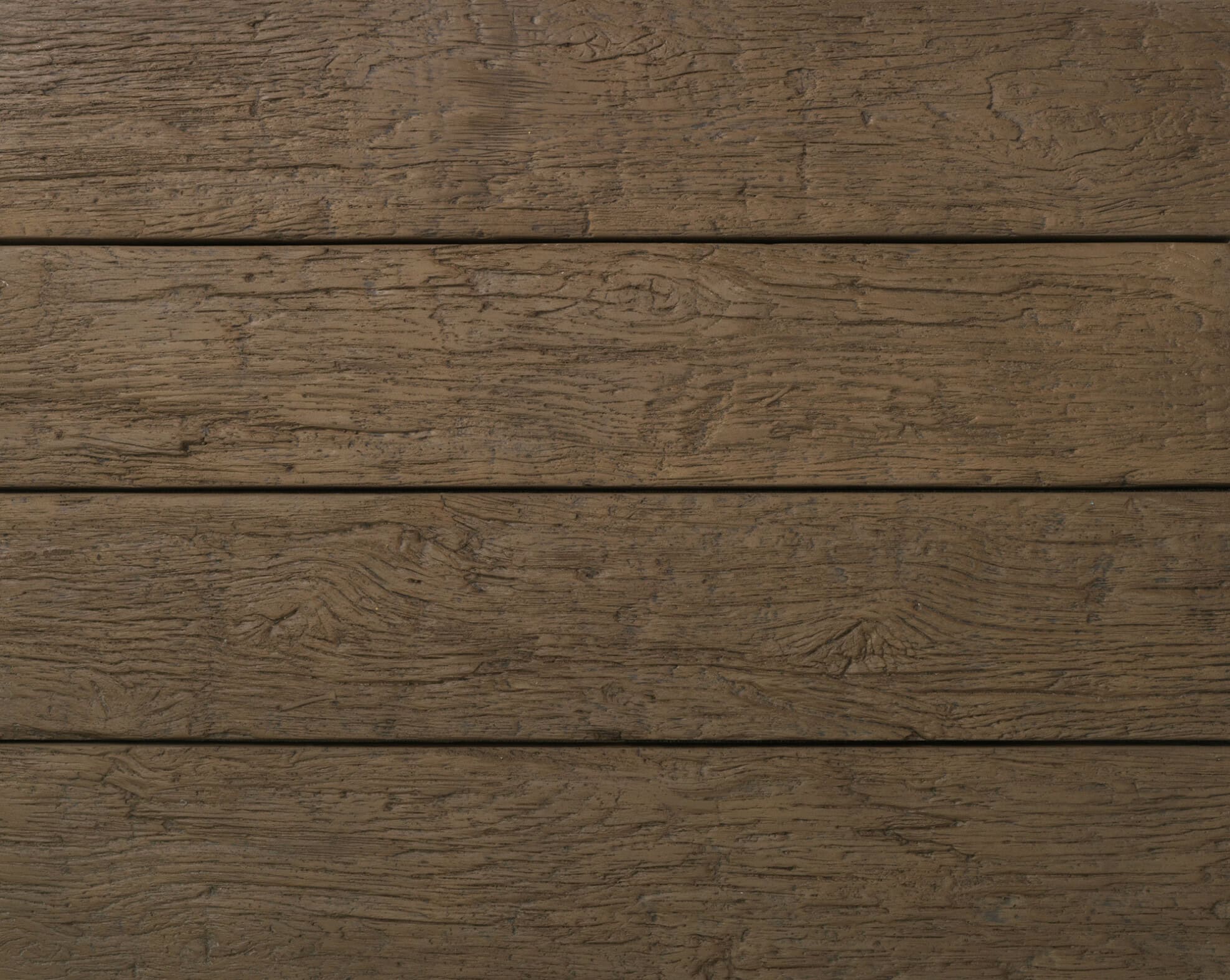
Millboard composite decking boards are moulded from real oak. The texture and hand-finished colour helps them accurately mimic the natural nuances of wood grain while optimising performance.
See the texture for yourself, order up to three free samples.
Decking Material and Composition
The key to safe and low-slip decking is the rubber-like elastomer coating. However, the innovative wood-free core also helps it avoid moisture penetration and mould growth, which could otherwise contribute to unnecessary slip hazards. Even when wet, Millboard composite decking boards are still significantly less slippery than timber.

Why Choose Millboard Composite Decking?
Unlike traditional wooden decking, composite decking boards are low-maintenance, durable, and highly resistant to rot and warping. They’re an excellent lower-risk option for your hospitality venue or residential garden. Millboard’s composite boards are available in a variety of colours to suit your decking project. Matching woodgrain edging, composite fascia boards and lost-head Durafix fixings help achieve a seamless, high-quality finish, even for curved decking designs.
Our Plas-Pro or Duospan subframe systems and Self-Levelling Pedestals can be tailored to various substrates from concrete to lawn, or even sloped gardens. We have a wide network of approved installers to call on to make your dream decking a reality.
If you’re looking for safer, low-slip decking that doesn’t sacrifice visual appeal, you’ll find it here at Millboard. Explore the different styles and colours available and order your free samples with free delivery.
 |  |
| Enhanced Grain – Coppered Oak | Weathered Oak – Vintage |
 |  |
| Lasta Grip – Golden Oak | Modello Linear – Antique Oak |