

Composite vs PVC Cladding: A Comprehensive Comparison
Cladding is crucial in protecting your home’s exterior while enhancing its aesthetic appeal. Both durable, composite and PVC are two cladding options used widely for residential and commercial projects, each offering specific advantages. While PVC is known for its affordability and ease of installation, composite cladding delivers enhanced durability and a more natural appearance.
This guide provides a clear, side-by-side comparison of composite vs PVC cladding, helping you determine which one best suits your project’s design, budget, and performance expectations.
lick on one of the sections to learn more:
- Understanding composite cladding: Features & benefits
Discover what composite cladding is and how Millboard’s Envello range stands out.
- What is PVC cladding, and where is it typically used?
Find out when plastic cladding is the right choice for your home.
- Composite vs PVC: Performance and longevity
Compare the two materials on their key differences and performance.
- Design, finish and visual appeal
Discover the range of colours available and find the right cladding style.
- Which option is easier to install?
Discover which option is easier to install: composite vs PVC cladding.
- Maintaining your cladding: Composite vs PVC
Learn how to maintain the appearance and quality of exterior cladding.
- Environmental and sustainability factors
Explore the environmental impact of cladding and discover how it can enhance your home.
- Which should you choose? Composite vs PVC cladding
Determine which popular option best suits your needs.
- Frequently asked questions
Read common queries on composite vs PVC cladding.
Understanding Composite Cladding: Materials and Advantages
Composite cladding is a high-performance external-facing material, generally made from a combination of resins, mineral components, and fibre reinforcements. It is designed to combine the natural beauty of wood with the resilience and low maintenance requirements of synthetic materials.
The primary appeal of composite cladding is its durability and longevity. These boards are highly resistant to warping, cracking, and fading, even in extreme weather conditions. Composite materials also require minimal upkeep compared to other cladding options, usually only needing occasional cleaning to maintain their appearance.
Benefits of composite cladding include:
- Highly realistic timber look with UV-stable colouring.
- Durable and highly resistant to moisture and fading.
- Unlikely to crack, warp or rot over time.
- Low maintenance and long-lasting.
While composite cladding is often more expensive than PVC, its long-term durability and minimal maintenance requirements can offset the higher upfront costs over time.
Read more about whether composite cladding is worth the cost with our guide here.
How Millboard Envello Cladding Compares
Unlike traditional composite cladding, premium options, like Millboard’s Envello range, are completely wood-free, non-porous and moulded from real oak to replicate the complexity of timber, without the usual drawbacks. We use a unique fibreglass reinforced resin-mineral composite, rather than wood fibres and plastics, which strengthens the boards.
Millboard cladding is especially suited to UK climates, thanks to its non-absorbent surface and structural integrity over time.
Key features of Millboard’s Envello Collection include:
- 100% wood-free – so there’s no risk of rotting or insect damage.
- Crafted from real oak moulds.
- Highly resistant to fading, warping, and splintering.
- Exceptionally lightweight.
- Tongue-and-groove boards for fast, seamless installation.
- Tested to BS EN 13501-1 (Euroclass D when fitted as per install guides).


 | Order up to three free samples below to find your favourite cladding option. |
| Décor | Request Free Samples |
What Is PVC Cladding and Where Is It Typically Used?
PVC (polyvinyl chloride) cladding is a lightweight plastic solution used on exterior walls, soffits, and fascias. It is one of the most cost-effective options for cladding and is commonly used in budget-conscious refurbishments, low-rise buildings or temporary structures.
Benefits of PVC cladding include:
- Affordable and widely available.
- Lightweight and easy to cut or fit.
- Highly moisture-resistant and won’t rust or corrode.
While PVC offers upfront savings, there are certain drawbacks. Over time, its visual appearance may feel less premium due to fading or cracking under prolonged exposure to UV rays or harsh weather conditions. Also, compared to other cladding materials, PVC may have a limited design range and a more synthetic look.
Although this may appeal to some homeowners, those seeking a natural aesthetic may want to consider an alternative.
Composite vs PVC: Performance and Longevity
Composite and PVC materials are both durable and low maintenance, making them popular choices for exterior applications.
In the table below, compare the two cladding materials to find which best suits your requirements:
| Feature | Composite Cladding (e.g. Millboard) | PVC Cladding |
| Appearance | Natural, wood-like finish | Manufactured appearance |
| Durability | High; resistant to weather & impact | Medium; can become brittle |
| UV Resistance | Excellent; fade-resistant pigments | Lower; prone to fade and discolouration |
| Fire Rating | Euroclass D (to EN 13501-1) | Euroclass D (to EN 13501-1) |
| Lifespan | 25+ years with minimal maintenance | 10–15 years with potential fading or warping |
| Application Suitability | Residential and commercial | Best suited to low-rise & sheds |
In summary, while PVC cladding is a budget-friendly option suitable for straightforward projects, it may be appropriate for less demanding or temporary applications.
On the other hand, premium composite cladding, particularly from Millboard, offers a more robust and longer-term solution, delivering superior performance and aesthetics.
Design, Finish and Visual Appeal
PVC cladding is typically flat or wood-grain embossed, and while functional, it can appear uniform or artificial. Colour options are usually limited, and some finishes may discolour in direct sunlight.
Millboard’s composite cladding ranges are moulded from original oak masters and hand-tinted to ensure each board reflects a natural, non-repeating grain. The result is a highly authentic timber look, suitable for modern and traditional architectural styles.
Browse some of the design options available with Envello Cladding:
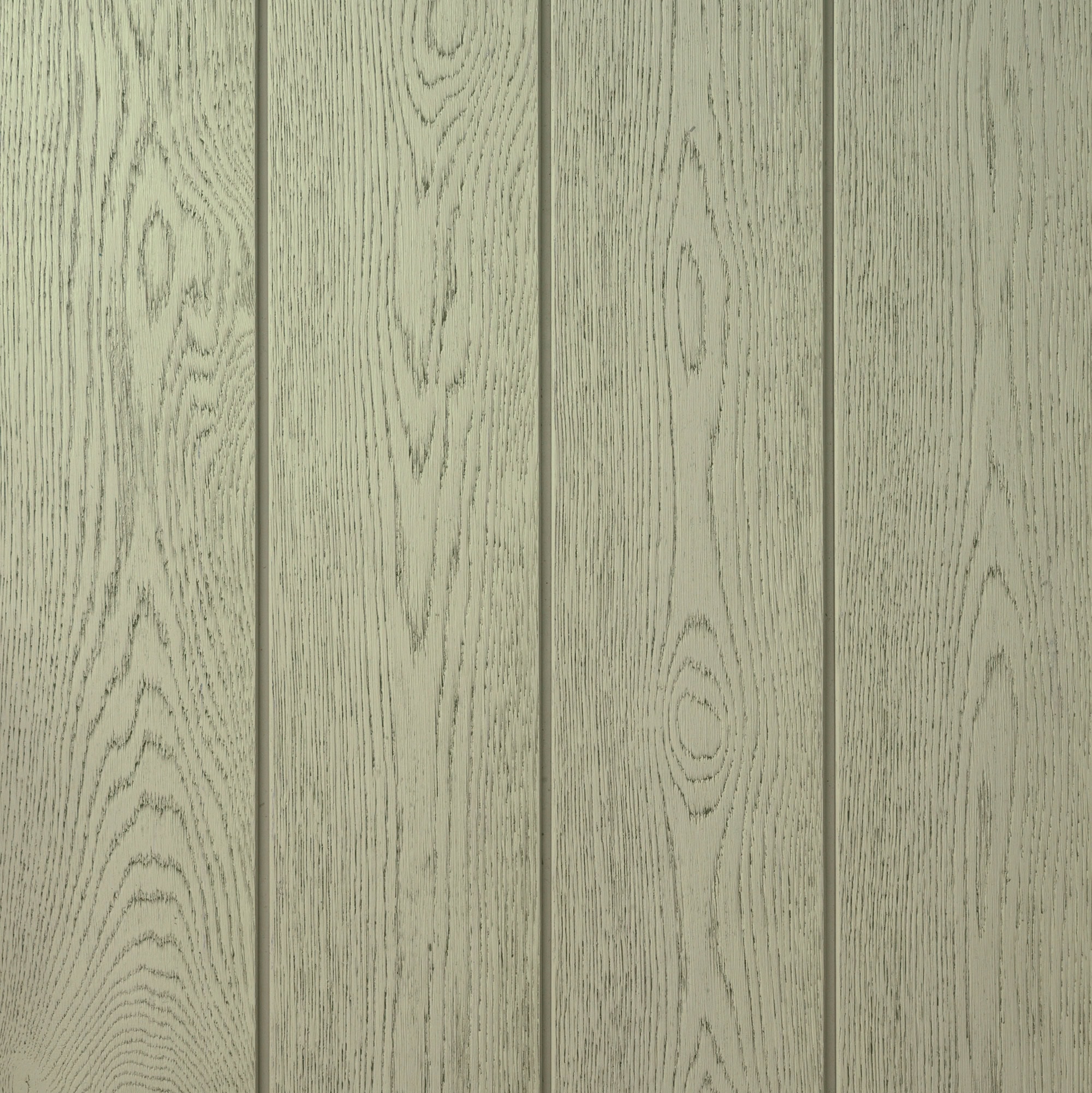
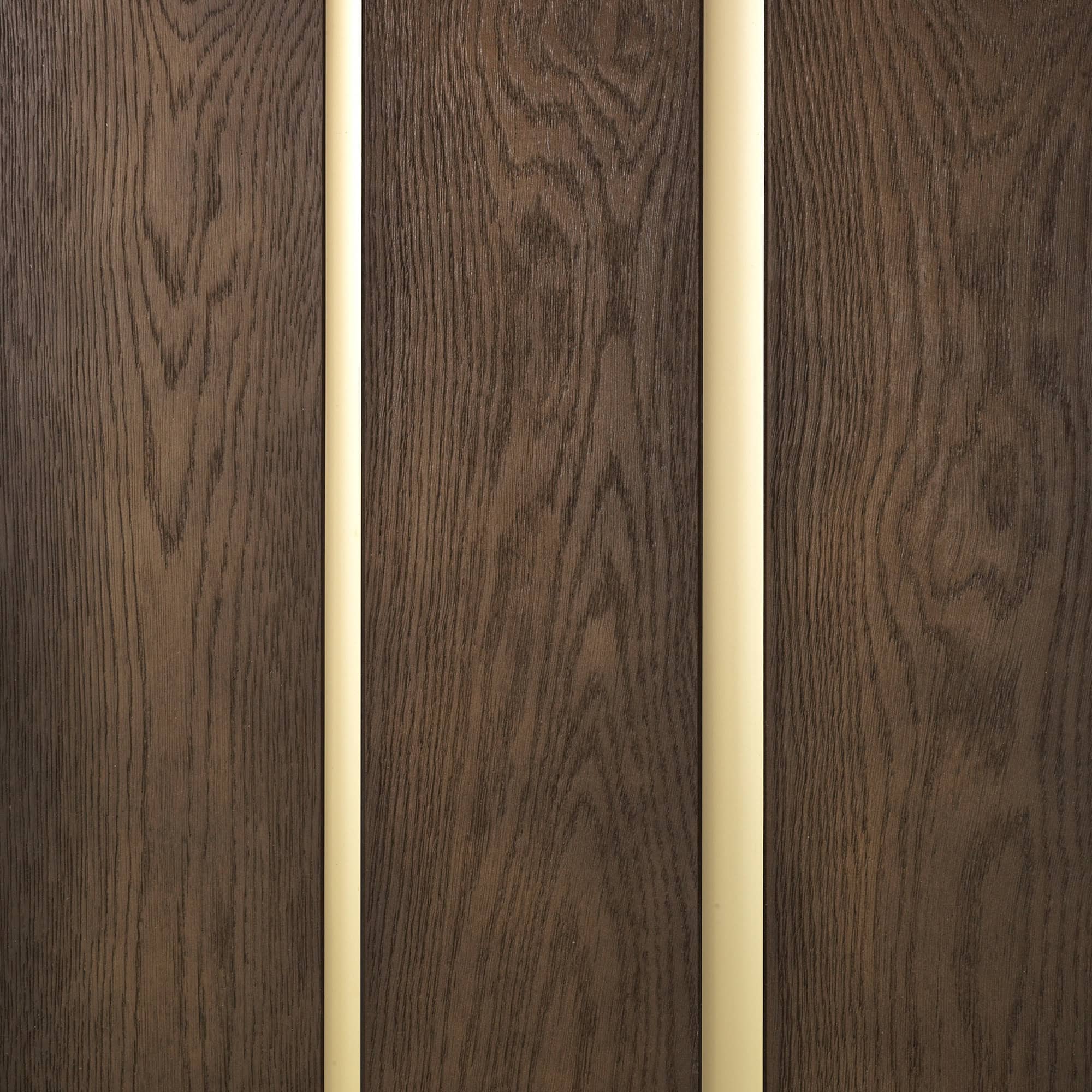


For projects where exterior appearance and design coherence are priorities, composite cladding offers far greater creative scope and visual quality.
Sample your favourites and request up to three Millboard decking or cladding boards below.
Which Option is Easier to Install?
Both materials are considered installer-friendly, but composite systems often include refined features such as tongue-and-groove connections, concealed fixings and pre-matched accessories.
PVC cladding is light and easy to cut, but may require more fixings to prevent movement, especially in high-wind areas. Care must also be taken to avoid cracking during handling or fitting.
Millboard’s composite cladding boards can be fitted using standard tools and hidden fixings for a smooth and efficient installation process.
To ensure proper installation and peace of mind, consider a professional installer. Millboard-approved installers undergo quality training on our products, ensuring all installations are correct and performed with specialist tools, fixings, optional accessories, and finishes.
Find your nearest Millboard-approved installer today.
Maintaining Your Cladding: Composite vs PVC
Composite cladding is low maintenance, highly resistant to algae, frost, and grime, requiring no sealing or treatment. A rinse with a hose or occasional wipe-down is usually sufficient to keep it looking fresh.
PVC cladding also requires minimal maintenance, but can become brittle or discolour with age. Occasional repainting may be necessary if the colour fades due to UV exposure. Cleaning agents should be used carefully to avoid damaging the surface. Once faded or cracked, it is difficult to restore or touch up.
Environmental and Sustainability Factors
Both the production of composite and PVC cladding involves petrochemicals and additives, and while some PVC grades are recyclable, many are not widely accepted in post-use recycling streams. Environmental ratings for PVC can vary depending on formulation and sourcing.
Millboard composite cladding incorporates recycled content, renewable biopolymers and avoids the need for timber harvesting. The longevity of both composite and PVC cladding reduces replacement frequency and resource usage across a building’s lifespan.
For projects focused on sustainability or lifecycle performance, wood-free composite cladding presents a stronger environmental profile.
Fire Rating
Millboard’s composite cladding collections, Shadow Line + and Board & Batten+ cladding boards, have been tested to BS EN13501-1 and have a classification of D-s3, d0 when fitted by our installation guide.
Some PVC options are also tested to BS EN 13501-1 and can have a classification of euroclass D.
The suitability of the cladding in the required location is to be determined by a certified professional (such as a building control, insurance, or fire officer).
Certification, along with installation guidance, is available on our website: https://www.millboard.com/en-gb/resources.
Which Should You Choose? Composite vs PVC Cladding
Ultimately, the decision of the cladding option depends on your priorities and budget. If cost is your primary concern, PVC offers a practical and affordable solution.
However, if you value durability and aesthetics, premium composite cladding is a worthwhile consideration. While it requires a higher initial investment, its long-term performance and visual appeal make it a beneficial addition to any home.
Browse Millboard Composite Cladding collections here, or call us at 024 7643 9943 for more information.
Frequently Asked Questions
Related Content
Composite vs Wood Cladding: Choosing the Best for Your Home