
Composite Cladding vs Stone: Which Is Superior?
Choosing an exterior cladding material is one of the most impactful decisions when designing or renovating your home or commercial building. Both composite and stone cladding offer strong visual appeal and structural performance even in the face of adverse weather conditions. However, the two materials differ significantly in how they perform, install and endure over time.
This guide compares these two popular cladding options, providing a clear breakdown of their benefits, limitations and performance in the long run. Specialist insights on the proven advantages of premium composite cladding may help architects, designers and builders specify with confidence.
Click on one of the following sections to learn more
- Understanding composite cladding: Features and composition
Explore the materials and benefits behind modern wood-free composite cladding systems.
- An overview of natural stone cladding
Learn about the strengths and limitations of traditional stone cladding materials.
- Composite cladding vs stone: A comparative analysis
Compare both cladding types side-by-side across key performance, aesthetic, and practical factors.
- Durability, longevity and performance
Discover how each material holds up over time and in different environmental conditions.
- Maintenance expectations
Understand the ongoing care and upkeep each cladding type requires.
- Fire safety and compliance considerations
Examine the fire ratings and regulatory suitability of composite and stone cladding.
- Cost comparison and installation complexity
Compare initial costs, labour demands, and long-term value for each option.
- Environmental considerations
Evaluate the sustainability credentials of each material from sourcing to lifespan.
- Aesthetic versatility and practical applications
See how each material can be tailored to suit different architectural styles and design needs.
- Frequently Asked Questions
Understanding Composite Cladding: Features and Composition
Composite cladding is a high-performance material engineered to combine visual appeal with low maintenance requirements and structural integrity. Wood Plastic Composite is a common type of cladding that uses a combination of wood fibres and plastic for a modern alternative to wood cladding or fibre cement cladding.
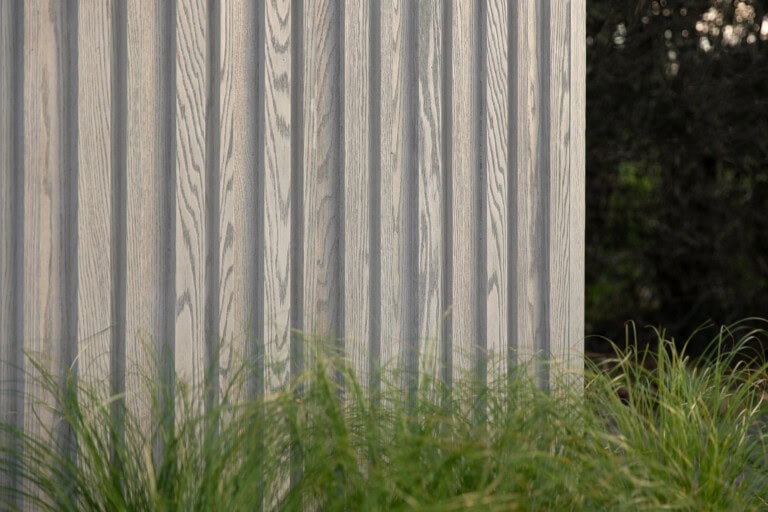
However, modern systems, such as Millboard’s Envello composite cladding panels, use a proprietary blend of minerals, resin, biopolymers and fibreglass reinforcement, making the composite material completely wood-free. The non-porous wall cladding panels are moulded from master oak boards, so they capture the beauty of real timber cladding.
Key features of premium composite wall cladding:
- Hand-moulded wood-effect finish, tinted in a wide range of colours for realism and design flexibility.
- Resistant to rotting, warping or splitting.
- Hard-wearing so it stands up against harsh weather conditions.
- Non-porous and highly resistant to staining and moisture damage.
- Offers additional thermal insulation for your external walls.
- Ease of installation: Lightweight panels with a tongue-and-groove system ensure fast and seamless application.
- Fire-tested to BS EN 13501-1 with a Euroclass D rating when installed in accordance to the relevant install guide.
Because it’s wood-free, Millboard cladding avoids issues like leaching tannins, insect damage or water ingress — making it particularly suitable for UK climates and low-rise building façades.
An Overview of Natural Stone Cladding
Stone cladding, typically crafted from limestone, granite, slate, or sandstone, is prized for its natural character and durability. The traditional material has been used in architecture for many centuries and remains a popular option for various architectural styles, from cosy cottages to contemporary construction projects.
Benefits of stone cladding:
- Authentic natural materials come with textural and colour variation.
- Long-lasting structural integrity when properly installed.
- Highly resistant to UV and extreme weather conditions.
However, natural stone is heavy, porous and often requires sealing or specific care to maintain its appearance. Installations involve higher labour costs due to the complexity of cutting and fixing each stone to fit. Moreover, taller exterior walls come with additional safety risks and the need for specialist fixing systems. Over time, weathering can also lead to staining, moss growth or even cracks, particularly in exposed or coastal settings.
Composite Cladding vs Stone: A Comparative Analysis
| Feature | Composite Cladding (e.g. Millboard) | Natural Stone Cladding |
| Ease of Installation | Panels are lightweight and easy to install. | The material is heavy, and the installation process can be more labour-intensive. |
| Appearance | Consistent, hand-tinted finish which is highly resistant to fading from UV exposure. | Natural variation and ageing from weathering, moss, lichen and algae. |
| Maintenance | Low: only an occasional, simple wash is required. | May require sealing and professional cleaning. |
| Moisture Resistance | Non-porous. | Porous; may absorb water. |
| Fire Safety | Rated Euroclass D (to spec). | Non-combustible. |
Composite cladding offers particular advantages where installation simplicity, visual consistency, and weather resistance are priorities. Stone facing may suit heritage-style projects where natural materials are central to the appeal of the property. Consider the additional installation time, budget and upkeep challenges.
Millboard offers three styles of composite cladding: Board & Batten+, Shadow Line+ and Décor. These are designed to complement a variety of architectural styles from alpine lodges to coastal cottages.
Durability, Longevity and Performance
Longevity and endurance are essential when choosing a material for the exterior of your home. While both offer excellent structural integrity, there are certain advantages to composite options. Resistant to moisture, they don’t degrade from freeze & thaw cycles like natural stone can. Moreover, the surface is much less vulnerable to weathering or moss growth extending its natural lifespan. Meanwhile, there is no need for regular treatments.
Stone is naturally strong, keeping your home safe from the elements, but some types, such as limestone, can weather more quickly, especially in high-exposure areas like hillsides or coastal settings. While stone façades will maintain a structurally sound finish for decades, they may need more attention in the long run.
Maintenance Expectations
Composite cladding requires minimal upkeep — periodic washing with mild soapy water is often enough to keep your feature wall looking fresh. Being non-porous, moisture won’t soak into the product.
In contrast, stone cladding is long-lasting but can weather, stain, attract moss or absorb water over time, especially in shaded or damp locations. Some stones are more resilient than others (e.g. granite vs limestone), but overall, composite materials are an excellent choice if you want a more hands-off maintenance experience.
Fire Safety and Compliance Considerations
Millboard’s Envello cladding collections have been tested to BS EN 13501-1 and achieve a Euroclass D-s3, d0 rating when installed in accordance with guidance. This provides a degree of fire performance suitable for many low-rise residential and commercial buildings, all areas should be used in accordance with relevant regulations.
Stone cladding, being a naturally non-combustible material, has inherent fire resistance and may be preferred in higher-risk zones or where strict fire regulations apply. However, building regulation compliance still depends on the complete system and must be validated by qualified professionals.
Millboard is not intended for use as cladding on buildings over 11m in height.
Cost Comparison and Installation Complexity
Composite cladding may have a higher initial product cost than low-grade stone but can offer substantial savings in installation speed and labour costs. Its lighter weight and user-friendly interlocking system can reduce both time on site and the risk of handling issues.
Stone cladding often requires mechanical fixings or adhesive systems, intensive cutting, and additional structural support. These complexities can significantly raise labour and preparation costs.
Over time, composite cladding can also provide value through reduced maintenance, longer-lasting appearance and lower risk of staining or damage.
Read more about the costs associated with composite cladding.
Environmental Considerations
Millboard composite cladding incorporates recycled materials in its construction. Being wood-free, it avoids the environmental impacts of deforestation, and its long service life reduces the need for multiple replacements.
Stone, while natural, must be quarried before being processed — however there are responsible sourced options from ethical suppliers that help to reduce their environmental impact.
Aesthetic Versatility and Practical Applications
There are many design options when it comes to stone facing – you can choose different types of stones, stone size, orientation, and even application patterns. Although it’s important to consider that more complex applications will come with additional installation costs and time. Ultimately, stone cladding is a stunning choice for heritage or listed buildings or for a rustic, natural look.
On the other hand, Millboard Envello Cladding offers the natural appeal of timber cladding due to the hand-moulded woodgrain texture. Additionally, panels are available in a wide range of colours from Salt Blue to Golden Oak. Several style options allow you to customise your cladding to your unique tastes; whether you prefer a traditional or modern look.
Millboards Envello Cladding includes three elegant styles – Add your favourites to your free sample pack


Frequently Asked Questions
What to read next
Comparing composite and PVC cladding
Is composite cladding worth the cost?
Comparing the costs of different cladding materials